
Top 20 Innovation Hubs to Watch in 2026
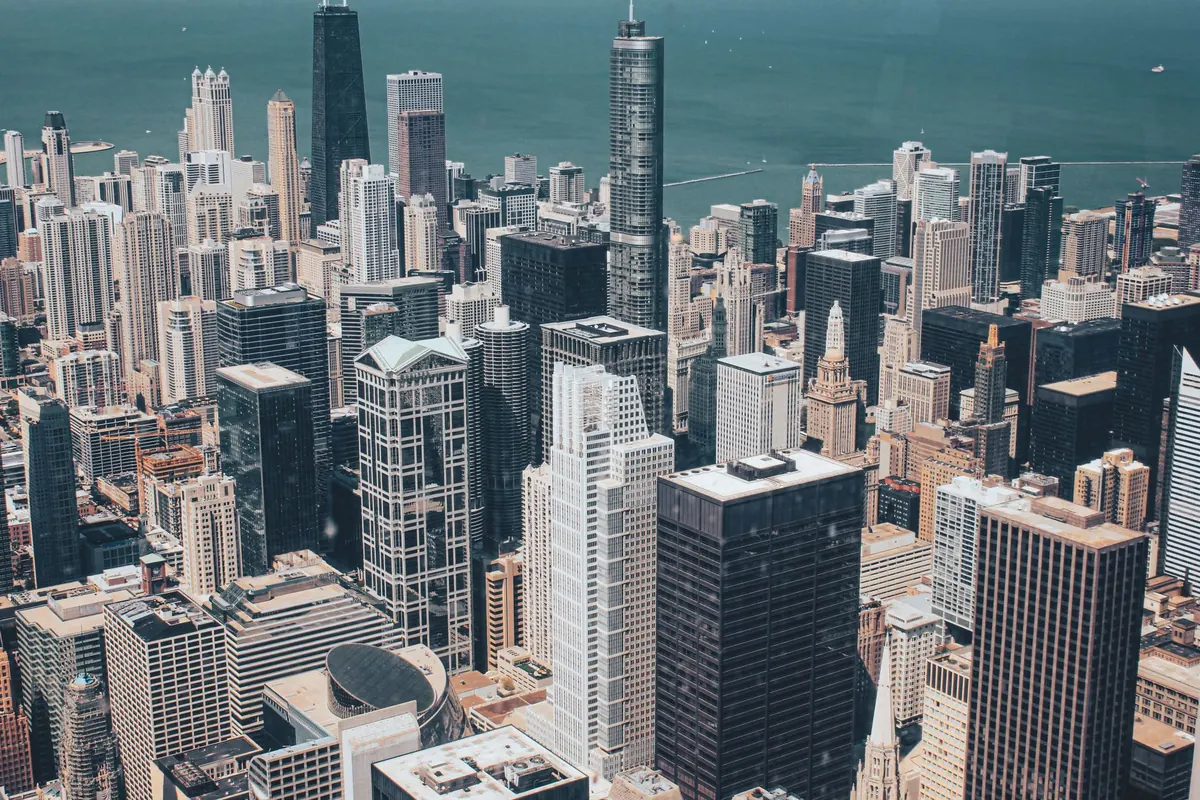
Hub rankings usually reward size. That is a mistake. The places that matter next are rarely the ones with the tallest towers. They are the ones where a founder can hire a battery chemist, secure a grid connection and find a first customer without leaving the metro area.
What follows is not a league table of the biggest technology clusters. It tracks momentum: cities and regions where funding, talent and policy are pulling in the same direction, with weight given to deep tech, climate tech and machine learning. Some names will be familiar. A few should not be.
How we weighed the evidence
Twenty hubs is a tight list, so the criteria had to be strict. Headline funding totals are the least useful signal; a single large round can flatter a weak ecosystem for years. What matters more is whether money, people and permissions stay put.
- Capital that recirculates. Local funds, angel networks and exited founders who reinvest nearby, rather than capital that flies in and out.
- Talent that stays. Strong universities plus a credible reason for graduates to remain: interesting employers, affordable housing, decent schools.
- Policy that ships. Permits, visas, procurement and grid connections granted on a schedule, not the subject of a press release.
- A physical base. Ports, fabs, grid capacity, water, lab space and industrial land. Climate and hardware companies cannot run on laptops.
- Room to grow. Commute times, rents and construction rules that do not strangle a company at fifty employees.
No city scores well on all five. Two strong signals and one honest weakness usually beats five mediocre ones.
The top 20 hubs to watch
- Bengaluru, India — Arguably the deepest engineering bench in South Asia, now converting it into chip design, climate finance and hardware rather than services alone.
- Singapore — Sovereign capital, predictable regulation and a dense market make it the default base for Southeast Asian biotech and climate teams scaling across borders.
- Riyadh, Saudi Arabia — State procurement is doing what venture capital cannot: creating first customers for industrial, water and energy startups. Execution will decide whether it holds.
- Toronto–Waterloo, Canada — Research labs, an immigration pipeline and a cluster of early-stage machine learning and health companies packed within an hour of each other.
- Rotterdam–Delft, Netherlands — Port infrastructure, a serious engineering university and a national appetite for testing floating solar and industrial heat reuse at real scale.
- Taipei–Hsinchu, Taiwan — The centre of gravity for advanced chipmaking keeps pulling in materials, equipment and packaging startups. Tight talent is itself a signal.
- Toulouse, France — Aerospace primes, a deep supplier network and growing space and hydrogen activity give hardware engineers genuine career depth.
- Austin, United States — Still the best-funded landing spot for semiconductor and energy hardware in North America, though rents and grid strain are real constraints.
- Nairobi, Kenya — Mobile-first payments plus real off-grid energy demand have produced companies solving problems that richer markets only simulate.
- Seoul, South Korea — Battery, display and robotics supply chains sit beside an unusually fast-moving consumer market, shortening the path from prototype to product.
- Oslo, Norway — Battery materials, carbon capture and electric maritime transport, funded by a state willing to back industrial bets over decades.
- Montreal, Canada — A research-heavy machine learning cluster slowly turning into company formation, with a growing battery and aerospace base alongside it.
- Shenzhen, China — The fastest hardware iteration loop anywhere. Whatever the policy weather, supplier density in a few square kilometres is hard to copy.
- Denver–Boulder, United States — Climate, space and geospatial firms cluster here because customers, labs and land are nearby. The cost edge over the coasts is narrowing, not gone.
- Helsinki–Espoo, Finland — Quantum hardware, energy software and a small population that adopts new infrastructure quickly. Ideal for testing things that need a real grid.
- Bristol–Bath, United Kingdom — Chip design, net-zero construction and a strong robotics community, close enough to London for capital, far enough to keep costs sane.
- Warsaw–Kraków, Poland — A large, affordable engineering workforce moving into defence-adjacent hardware, industrial software and energy transition work.
- Pittsburgh, United States — Robotics and autonomy talent concentrated around a few university labs, with cheap industrial space and a legacy of heavy engineering.
- Osaka–Kobe, Japan — Biotech, battery research and a manufacturing culture that treats process improvement as a competitive asset. Slow to hype, quick to ship.
- Tallinn, Estonia — Digital-first government and a dense founder network. It will never host a fab, but it is excellent for regulatory-heavy software and public procurement pilots.
Three shifts behind the rankings
Climate adaptation is replacing climate software
Carbon accounting tools multiplied quickly because they were cheap to build. The harder, more durable work now sits in flood defence, water treatment, grid reinforcement and industrial heat. That favours places with ports, pipes and engineering firms: Rotterdam, Oslo, Bristol, Denver.
Compute and power have become one problem
Every serious data centre project runs into the same wall: electricity, cooling, land and permits. Cities that can queue, approve and connect projects quickly are winning investment they would otherwise lose to larger rivals. This is where Helsinki, Singapore and parts of Texas have quietly pulled ahead.
Capitals are buying clusters
Riyadh, Seoul and Singapore are using state purchasing power to manufacture demand. It works when the contracts are specific and the payment terms are honest. It fails when startups spend more time on tender documents than on product. Watch the second cohort of suppliers, not the first.
The bottleneck is rarely the idea any more. It is permits, power and people.
What to watch over the next year
Grid interconnection queues will separate the serious hubs from the promotional ones. Defence-adjacent spending will keep pulling hardware talent toward Warsaw, Toulouse and Denver. And within large countries, the second cities are getting stronger: Waterloo over Toronto, Delft over Amsterdam, Kraków over Warsaw, Boulder over Denver. Cost, patience and space all live one train ride away from the famous postcode.
One caution: momentum reverses. A single large employer closing, a visa rule changing or a rent spike can undo three years of progress. Treat this list as a set of places worth a visit, not a verdict.
If you are moving, hiring or backing a company
Spend a week there before you commit. Talk to three people who left the ecosystem, not just the ones still cheerleading it. Ask a founder how long a work visa took and how long a grid connection took; the gap between those two answers tells you more than any brochure.
Check the graduate pipeline in your specific discipline, not the university's overall reputation. Ask whether the local funds lead rounds or only follow. Look at what the city does well when nobody is watching — maritime engineering, medical devices, industrial software — because that is the base you will actually hire from.
And keep one thing in mind: rankings age faster than leases. Nothing here is investment advice, so do your own diligence and speak to a qualified professional before committing serious capital or signing a long lease.
Photo: Pawel aparatem_go / Pexels